Nuclear Decomissioning: What it is and how we do it
October, 2024
When people hear the term “marine engineering,” they often think of coastal protection, construction, and repairs to bridges and small structures both above and below the waterline. At Kaymac Marine, our work spans a diverse range of projects. From small-scale scour works that maintain structural integrity to temporary interventions aiding railway companies in resuming service, we tackle it all. But our expertise also extends to large, complex projects like nuclear decommissioning.
Nuclear power has enormous potential. In the early 1990s, Britain’s power stations produced up to 10% of the country’s electricity. Today, nuclear energy provides 15% of the UK’s electricity from 9 reactors—all while keeping carbon emissions low.
What is nuclear decommissioning?
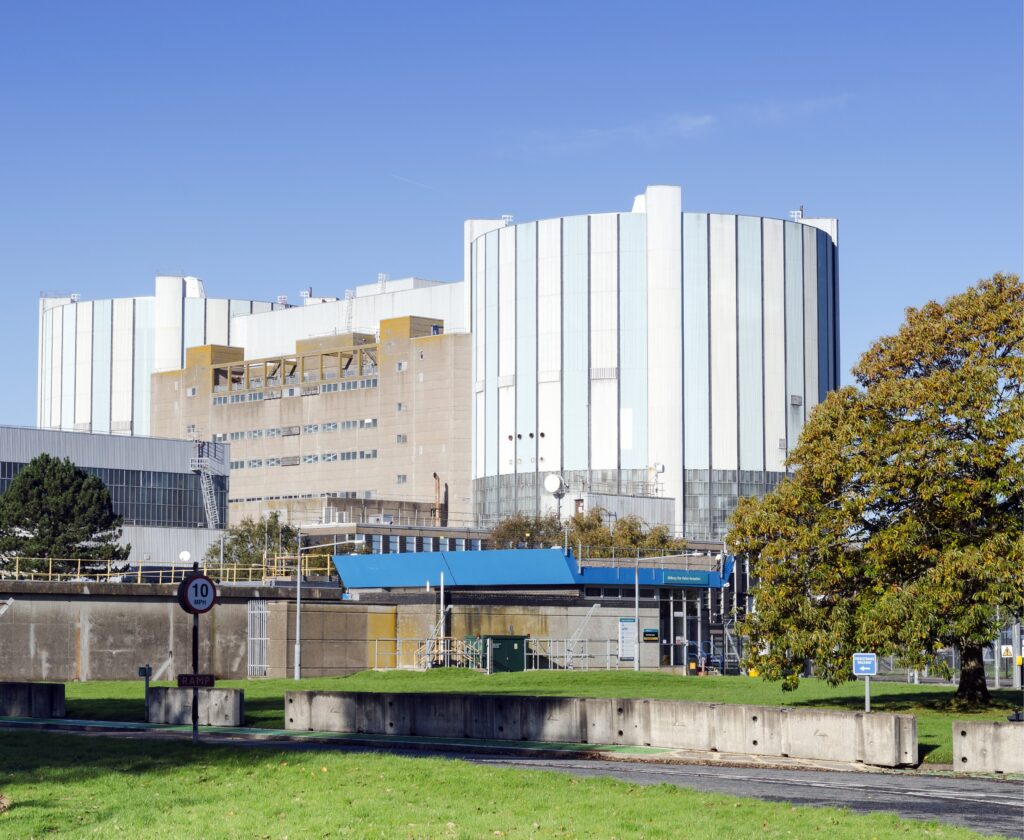
Nuclear decommissioning refers to the process of safely closing and dismantling a nuclear power plant. This involves removing the plant from service, decontaminating radioactive materials, and reducing residual radiation levels to ensure the site can be safely reused or regenerated. Large teams of specialists work together to ensure the process is done safely, minimizing any risk to the environment or surrounding communities.
Why is nuclear decommissioning important?
The devastating nuclear disaster at Reactor 4 in Chernobyl during the 1980s serves as a reminder of the potential risks associated with nuclear power. While nuclear energy can be a powerful source of clean electricity, safety is paramount. Public concerns surrounding nuclear power remain high, which makes the process of nuclear decommissioning essential to ensuring the long-term safety of our energy infrastructure.
Decommissioning takes place at the end of a nuclear power plant’s lifecycle. First, spent fuel is removed from the reactors—this process is called defueling. The spent fuel is then stored on-site for cooling and decay before it can be transported off-site for reprocessing. Once defueling is completed, the remaining radioactive elements are safely removed, preparing the site for dismantling.
What role does marine engineering play in nuclear decommissioning?
At Kaymac Marine, we support nuclear decommissioning efforts by providing essential marine engineering services. Nuclear power plants generate immense heat, much of which cannot be converted into electricity. These reactors require constant cooling, and seawater is often used for this purpose. Coastal nuclear plants use seawater to cool reactors and discharge it back, slightly warmer but without harming the environment.
Our team is on hand to offer a range of services that support the safe shutdown of nuclear assets and help mitigate environmental risks associated with nuclear decommissioning.
Our experience in nuclear decommissioning
Kaymac Marine has extensive experience working on nuclear power sites across the UK:
- Berkeley Power Station (2012)
For British Energy and Bam Nuttall, we designed and constructed seals for the cooling water culverts using in-situ concrete plugs. The entire operation was conducted underwater by divers using fabric formwork and micro-concrete. - Hinkley Point B Power Station (2009)
Similar to Berkeley, we sealed the cooling water culverts for British Energy, contributing to the secure decommissioning of the plant. - Sizewell A Power Station (2015)
On behalf of Interserve FM Ltd, we conducted detailed diving surveys to assess the condition of offshore structures along the cooling water culverts.
Oldbury Power Station (Principal Contractor for Magnox)
In 2019, Kaymac Marine was appointed principal contractor by Magnox to seal the cooling water culverts at Oldbury Power Station. The project involved challenging tidal conditions and the need to correct a previously failed attempt at sealing. We devised a solution involving a temporary concrete plug to create a dry working environment, allowing the permanent sealing to be completed without interruption.
We implemented a bespoke steel shuttering system, equipped with breather tubes to maintain quality during concrete placement. Once cured, the temporary plug facilitated the installation of a permanent plug, ensuring the site was safely decommissioned, and one step closer to the re-generation journey.
Gas-Fired Power Plant Experience: Pembroke Power Station
In addition to our work on nuclear decommissioning, Kaymac Marine provides marine engineering solutions for active nuclear and gas-fired power stations. We have designed and installed systems that help protect marine life and maintain the efficiency of cooling water systems in reactors.
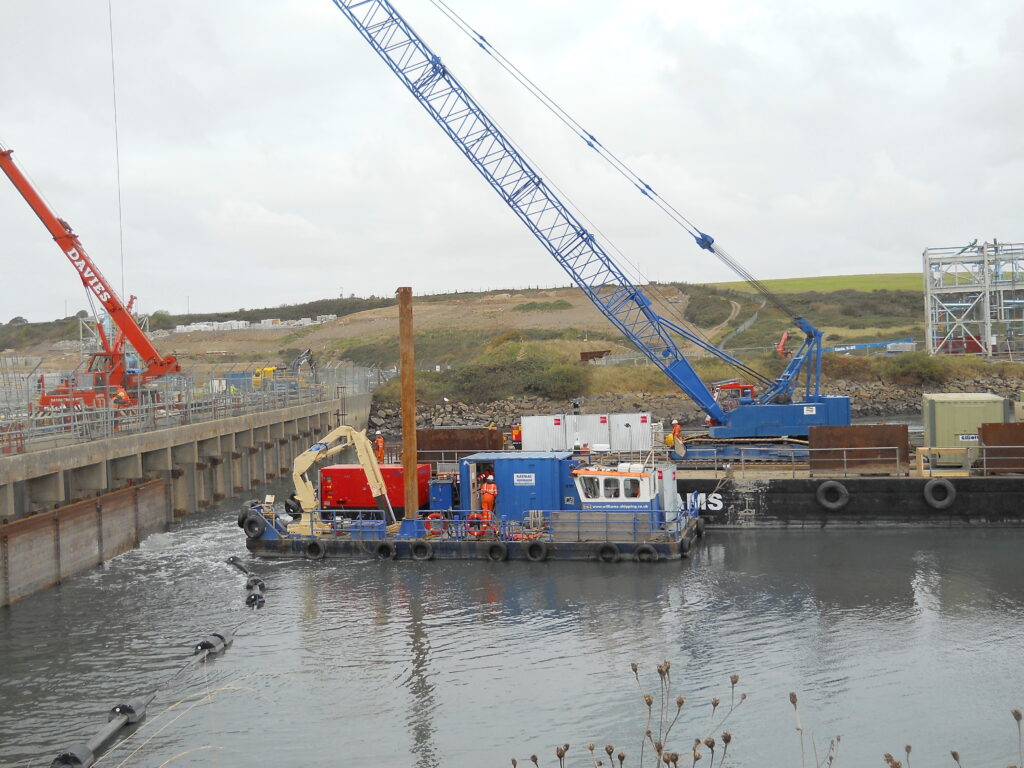
At Pembroke Power Station, Europe’s largest gas-fired power station, we were contracted to install permanent seals in the cooling water intakes and outfalls. This was part of the redevelopment of the site after decommissioning the original oil-fired power station. We successfully removed previously installed reinforced concrete plugs and developed complex temporary works to facilitate the station’s redevelopment.
Contact us today for more information on how Kaymac Marine can support your nuclear decommissioning project.